Why Every Modern Project Requirements a Committed Content Engine

Effectiveness Gains in 2026 SEO through Verified Link Data
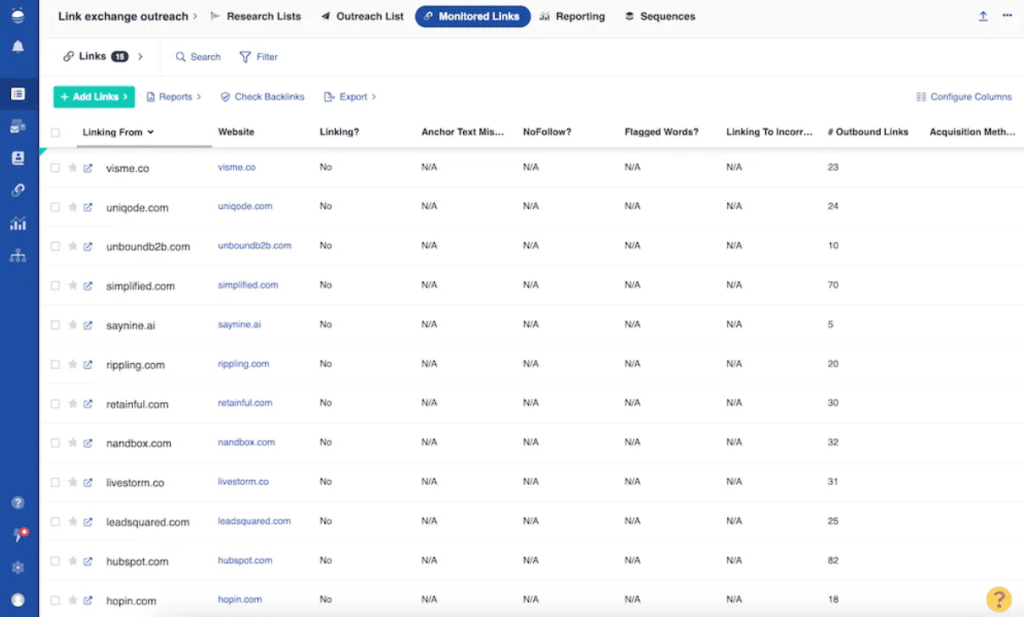
Online search engine algorithms in 2026 have actually shifted towards a strict focus on website authority and historic reliability. This shift makes the old method of mass-scraping millions of URLs a liability rather than an asset. Specialists working in competitive markets recognize that the volume of links matters far less than the verification status of the target domains. Using raw data often results in wasted resources, as a considerable part of scraped URLs consists of dead pages, parked domains, or websites that have actually been flagged for spam. Verified lists, nevertheless, provide a pre-filtered choice of targets that actually exist and accept brand-new material.
The monetary effect of using confirmed lists ends up being clear when looking at server costs and proxy use. In 2026, the cost of top quality residential proxies has actually increased, making it expensive to ping countless non-responsive websites. When a campaign works on a raw list, the software invests 90 percent of its time coming across 404 errors or timeouts. A validated list reverses this ratio. By concentrating on websites that have been looked for activity within the last 24 hours, campaigns achieve greater success rates with a portion of the bandwidth. This decrease in overhead directly enhances the return on investment for any digital campaign concentrated on search engine optimization.
Dependability is another factor that separates top-tier operators from those fighting with stagnant rankings. Raw information is static, representing a picture of the web that might be weeks or months old. Validated lists are typically upgraded in real-time or near-real-time. This indicates that if a site decreases or alters its posting requirements, it is gotten rid of from the active rotation right away. Specialists who focus on Asia Virtual Solutions Builder find that their success rates stay consistent since they are not hitting walls constructed by outdated information.
Information Accuracy and the Failure of Raw Scraping
Raw scraping in 2026 involves massive amounts of noise. Scrapers typically pull data from search results page that consist of localized versions of websites, duplicate material mirrors, and temporary caches. Attempting to develop links or perform outreach on these targets is a dish for disappointment. A project targeting a specific region might discover thousands of results that look promising but do not have any genuine authority. Verification protocols filter these out by looking for actual indexation and domain age before the information ever reaches the end user.
The technical requirements for verification have actually also evolved. Today, a verified list is not simply a list of "live" websites. It includes metadata about the CMS version, the existence of security certificates, and the speed of the server. This enables more accurate targeting. Rather of blasting a generic message to every URL found, professionals can section their lists based upon these technical markers. This level of accuracy is difficult with raw, unwashed data sets that need hours of manual sorting or pricey customized scripts to clean.
Security issues also play a part in the relocation towards confirmed information. Raw scraped lists regularly include "poisoned" URLs-- sites particularly set up by security firms or online search engine to track automated habits. Engaging with these sites can cause IP blacklisting or manual penalties. Real-time verification services serve as a buffer, evaluating these sites through separated nodes before certifying them for basic usage. This safety net protects the long-term health of a domain, which is a significant element of calculating total ROI in the digital growth sector.
Resource Allowance in Modern SEO Campaigns
Time is the most pricey resource in any technical project. When groups use raw data, they frequently invest more time fixing their tools than actually performing their strategy. The process of cleansing, deduplicating, and evaluating a raw list can take days. In 2026, lots of agencies find that Asia Virtual Solutions Complete Project Specialist provides a more foreseeable course to success due to the fact that the heavy lifting of data health is managed at the source. This allows professionals to focus on content quality and strategy rather than technical data management.
Scalability is also connected to the quality of the input information. To double the output of a raw-data campaign, an agency needs to double its proxy count, its server power, and its personnel hours for information cleaning. To double the output with confirmed lists, the firm merely increases its consumption of the pre-vetted information. The linear development of costs related to raw information makes it difficult to scale successfully. Validated lists offer a more exponential development curve due to the fact that the cost per successful link stays low while the failure rate remains negligible.
Competitive advantages in major tech centers frequently boil down to who can move the fastest. When a new specific niche or keyword trend emerges, the first to develop a presence wins. Using raw scraping tools to discover targets for a brand-new pattern can take a week of processing. Accessing a worldwide, real-time verified list allows for immediate action. This speed is a crucial part of ROI that is typically ignored in favor of easier metrics like the expense per thousand URLs.
The Value of International Reach and Localized Targeting
Modern campaigns are hardly ever limited to a single country. Scraping information for worldwide markets like those in various international territories provides language and encoding difficulties. Raw scrapers frequently misidentify the language of a website or stop working to comprehend local TLD nuances. Validated lists are classified by language and area with high precision, making sure that a project planned for a particular audience actually reaches it. This avoids the embarrassment and waste of placing English-language content on a website mostly visited by speakers of a various language.
Verification also includes examining the "community" of a site. In the 2026 SEO environment, the quality of outgoing links on a target site is just as crucial as the website's own authority. Real-time confirmation tools scan for "bad neighborhoods"-- sites that link out to suspicious or low-quality material. By avoiding these targets, professionals keep a clean profile that online search engine reward with much better visibility. Raw scraping tools can not perform this level of analysis on the fly, leading to the unexpected inclusion of websites that might potentially harm a brand name's credibility.
Maintenance of these lists is a 24/7 operation. A site that is a terrific target today might be sold and developed into a link farm tomorrow. The real-time element of modern verified lists guarantees that these changes are identified quickly. This proactive technique to data management suggests that the ROI of a campaign does not break down over time as the initial data set ages. Consistent refreshes are the standard in 2026, making fixed, raw lists look like relics of an earlier, less effective era of the web.
Final Ideas on Data Selection
The option in between raw data and confirmed website lists is an option in between manual labor and automated accuracy. While raw data might appear less expensive initially glance, the concealed expenses of proxies, server time, and failed attempts make it an even more costly alternative in the long run. The 2026 digital environment requires a level of accuracy that only real-time verification can provide. By picking data that has actually been checked and verified, professionals can ensure their projects are built on a solid foundation.
Success in high-end SEO is no longer a video game of who has the most data, but who has the very best data. The shift toward validated website lists represents a maturation of the market, where performance and security are valued over raw numbers. As search engines continue to fine-tune their capability to identify automatic patterns, the worth of tidy, confirmed targets will just continue to grow. Those who adapt to this reality and move away from the noise of raw scraping will find themselves in a much stronger position to achieve sustainable outcomes.
Ultimately, the goal of any link-building or outreach effort is to see a measurable increase in traffic and authority. Starting with a list of websites that are known to be active, indexed, and appropriate is the most direct course to that goal. In 2026, the data-driven method favored by experts in the regional market proves that quality beats quantity whenever. Verified lists are not simply a convenience; they are a necessity for anyone looking to optimize their impact in a congested digital area.