How Sophisticated Content Designs Enhance Link Approval Rates
The year 2026 has seen a considerable shift in how search engine optimization specialists handle data. Gone are the days when merely possessing a list of 10 thousand URLs guaranteed an one-upmanship. The sheer volume of info readily available has actually made the difference between raw scraped data and confirmed link notes the choosing consider successful digital techniques. As algorithms end up being more skilled at identifying low-value connections, the metrics used to evaluate these lists have evolved from simple quantity to complicated quality indications.
The Decrease of Raw Scraped Data in 2026
Raw scraping includes pulling every URL from an online search engine results page or a directory without checking the existing status or history of those websites. While this prevailed years earlier, 2026 marks a period where this approach frequently causes more damage than great. Scraped information is often riddled with "dead" domains, sites that have been de-indexed, or pages that have actually changed their submission policies. SEO specialists in the local market now find that over 80 percent of raw scraped information is unusable for top quality link acquisition.
When a site is scraped, the information is a static picture of a specific minute. By the time an expert tries to utilize that list, the site might have moved, ended, or carried out rigorous anti-bot steps. This leads to a high failure rate during the outreach or submission phase. Numerous professionals choose the consistency discovered in GSA SER Builder Service over unverified sources. Relying on validated data reduces the time spent on stopped working attempts and keeps the focus on active, high-performing targets.
Metric 1: Historical Determination and Live Confirmation
One of the most important metrics in 2026 is historic perseverance. This describes for how long a site has preserved its status as a practical link target. Confirmed lists are built by checking URLs regularly-- often daily-- to guarantee they still exist and still accept brand-new content. A verified list doesn't just show a URL; it shows a record of successful positionings over the last numerous months.
Live confirmation innovation has actually enhanced to the point where a list can be "warm" or "cold." A warm list contains websites that have actually effectively indexed new links within the last two days. Using a cold, raw scrape suggests running into damaged types and 404 mistakes. For those offering digital marketing services, the performance of a warm list is impossible to disregard. It gets rid of the uncertainty that utilized to define the early stages of a link-building campaign.
Metric 2: Semantic Alignment and Contextual Importance
Online search engine in 2026 no longer take a look at links in isolation. They assess the semantic relationship between the source and the target. Raw scrapes rarely account for this. They may categorize a website as "General" when it has actually pivoted to a specific niche like renewable resource or urban farming. Verified lists, however, typically include AI-generated tags that explain the current material focus of the site.
This contextual significance is a core metric for success in various regions. If the material on a target page does not match the intent of the link, the value of that link is efficiently zero. Confirmed information sets enable for precise filtering based on these semantic scores. This guarantees that every link contributed to a profile strengthens the topical authority of the website rather than diluting it with unimportant connections.
Metric 3: Indexation Speed and Discovery Rates
In 2026, the speed at which a brand-new link is discovered and indexed by online search engine has actually become a main efficiency sign. A link that exists however isn't indexed supplies no value. Raw scraped lists typically include "ghost sites"-- pages that look active but have actually been functionally disregarded by search spiders for months. Verified lists resolve this by monitoring the indexation speed of the domains on the list.
High-quality information service providers track for how long it takes for a brand-new post on a particular domain to appear in search outcomes. Websites with a high discovery rate are prioritized. GSA SER Builder GSA SER Project Service stays a leading concern for those managing high-stakes campaigns. By focusing on domains with tested indexation speed, experts can see the outcomes of their efforts in days instead of waiting weeks for a spider to discover a forgotten corner of the web.
Outbound Link Ratio and Neighborhood Quality
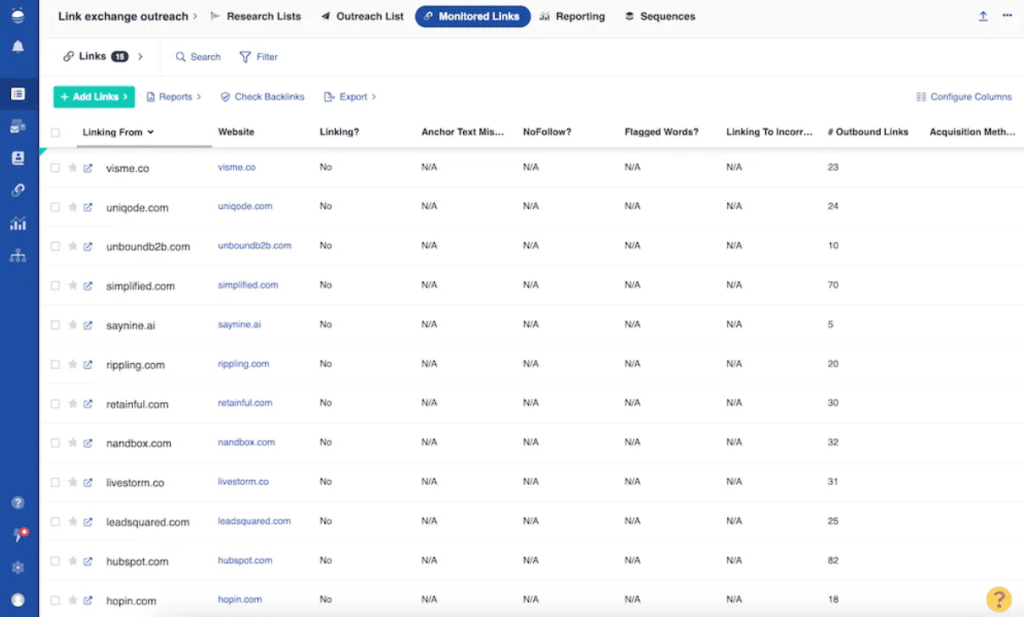
The "community" of a website is a metric that assesses the other websites a domain links to. In the past, scrapers would discover any website with an open remark area or a visitor post form. In 2026, if a domain links to a mix of top quality resources and low-quality spam, the whole domain is flagged. Verified lists go through a "area check" where domains are excluded if their outbound link ratio (OLR) is expensive or if they connect to suspicious sectors.
This vetting process avoids a website from being associated with "bad neighborhoods." Raw scrapes often lead straight into these traps because they only see the presence of a link opportunity, not the quality of the surrounding links. A verified list functions as a filter, getting rid of the risks before they ever touch a customer's profile. This is specifically useful for services in the local market that require to secure their digital track record while growing their online presence.
The Expense of Data Rot in SEO Campaigns
Information rot is the progressive decay of information accuracy. In SEO, information rot happens when websites go offline, change their CMS, or upgrade their robots.txt files. Raw scraped information has a rack life of about two weeks in 2026. Beyond that point, the rot makes the list more of a barrier than an assistance. The expense of paying an expert to by hand arrange through a decomposed list far goes beyond the preliminary cost of a validated, high-quality list.
Efficiency is the name of the video game. Using validated data permits a streamlined workflow where most of the time is spent on method and content development rather than data cleaning. When taking a look at the bottom line, the higher in advance expense of a verified list is balanced out by the huge decrease in labor hours. Most effective companies in local areas have actually moved toward a model where raw scraping is strictly a secondary research study tool, while validated lists drive the real execution.
Comparing Automation and Manual Oversight
While automation handles much of the verification procedure in 2026, the finest link lists still include a degree of manual oversight. Human editors can find patterns that AI might miss, such as a site that looks technically perfect however has a hazardous neighborhood or a history of unexpected content shifts. Confirmed lists frequently combine automated status checks with human quality control to make sure the highest requirements.
Raw scrapes are 100 percent automated and 0 percent evaluated. This absence of oversight is why they typically include replicate entries, reroute loops, and harmful URLs. For a brand's safety, the manual layer of a confirmed list supplies a buffer that automated scrapes can not match. Security is a significant concern in 2026, and a single destructive link in a project can trigger long lasting damage to a domain's trust score.
Future Proofing Link Acquisition for 2026 and Beyond
The trend towards data verification is not a short-term phase. As online search engine continue to integrate more sophisticated AI to assess web structures, the quality of information will just end up being more crucial. Success in 2026 requires a move away from the "more is better" mentality. The new mantra is "better is better." A list of 50 validated, high-authority, semantically appropriate links deserves more than a raw scrape of 50,000 unproven URLs.
Strategic growth depends on the ability to adapt to these changing metrics. By focusing on historic perseverance, indexation speed, and community quality, SEO experts can build profiles that stand up to algorithm updates. Using validated link lists makes sure that every action taken is based upon accurate, current information. In the competitive environment of 2026, this precision is the most valuable property a digital specialist can possess.